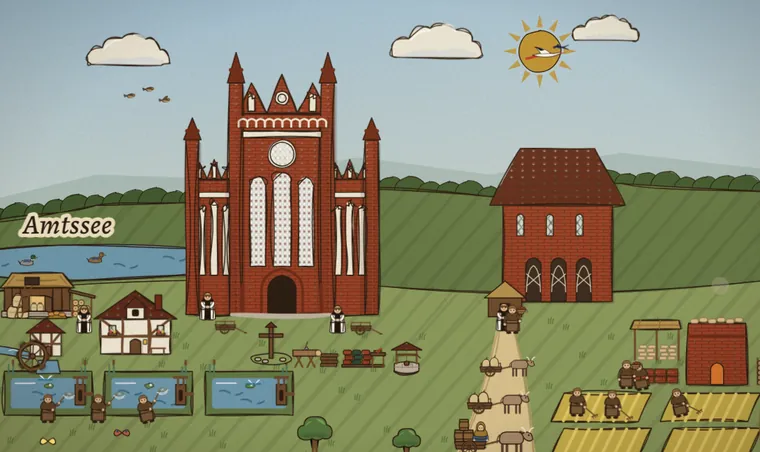
Every monk has a name
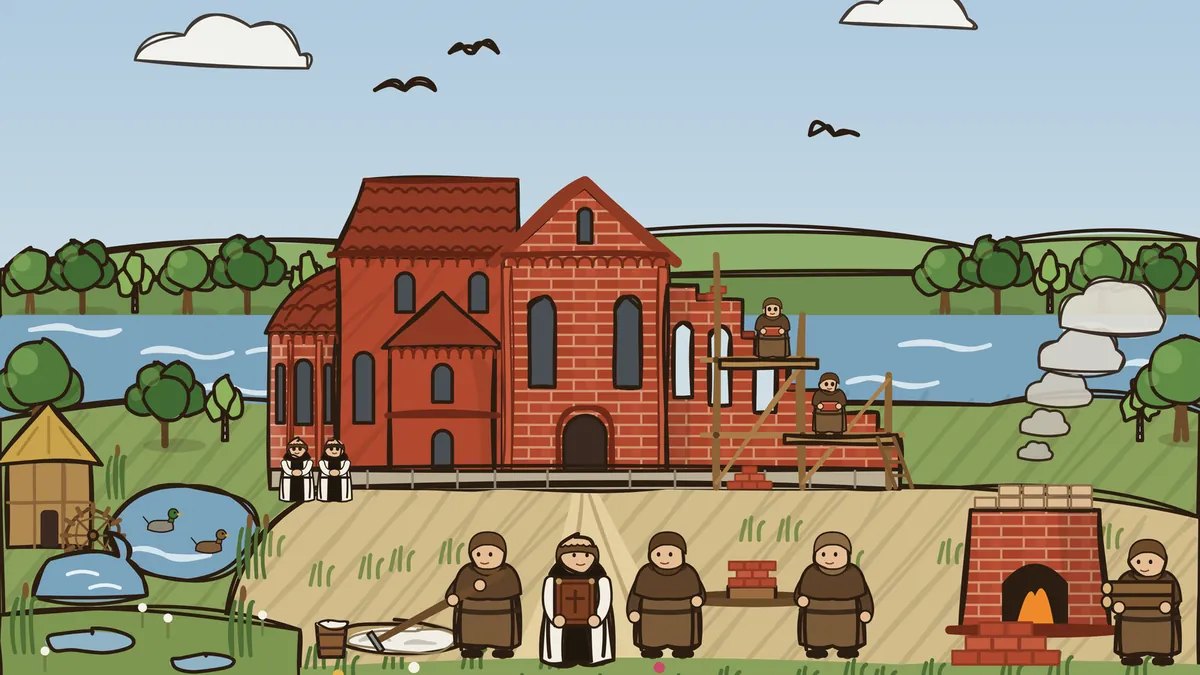
Brother Heinrich makes bricks, Brother Konrad fishes. Each one works at his own place in the pencil-style miniature. Tap one to meet him.
“Chorin: Ora et Labora” is a historical idle game about Kloster Chorin, a real Cistercian abbey near Berlin. Lead its monks from huts on an island in 1258 to the Brick Gothic church that still stands today, and on through 768 years of its true history.
Free to start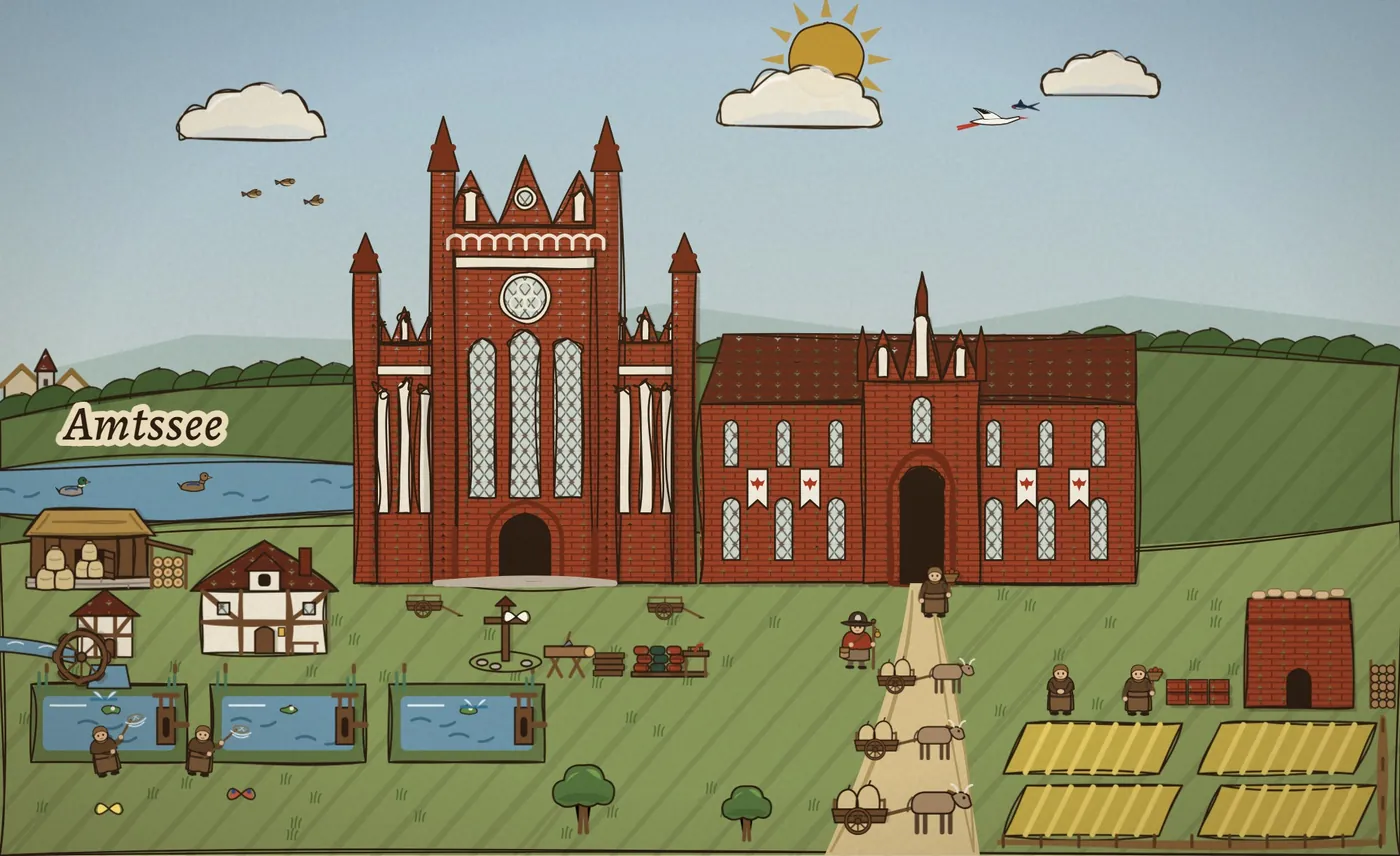
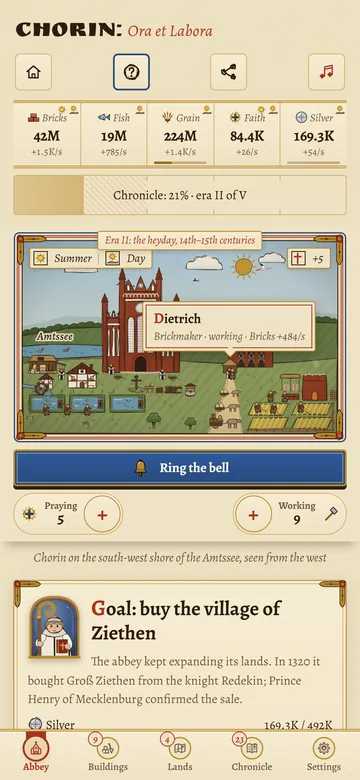
Clear the island, raise the first church, move to the shore and watch Chorin grow, fall into ruin and come back to life.
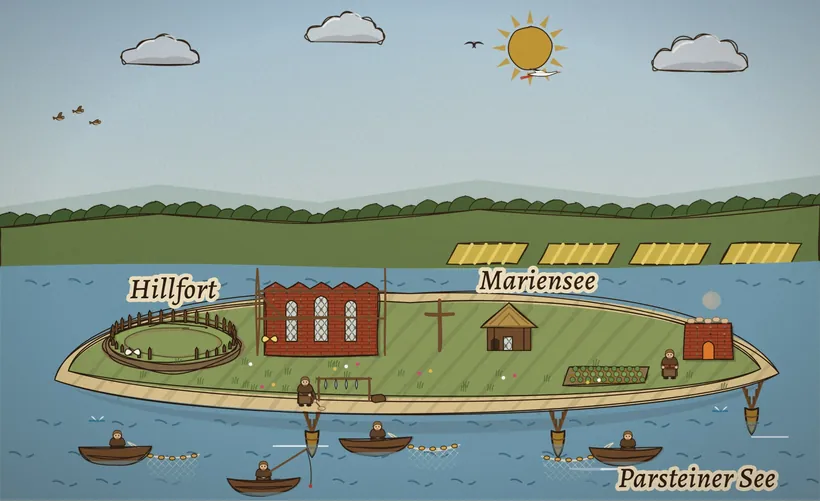
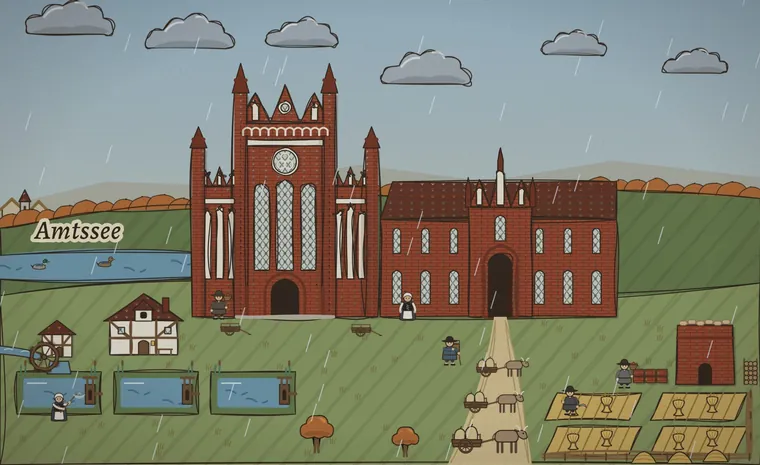
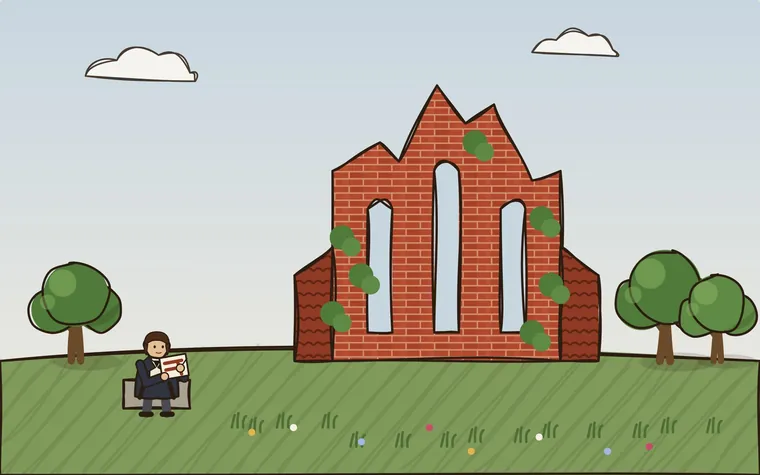
Every era of the game is a real chapter in the life of the abbey.
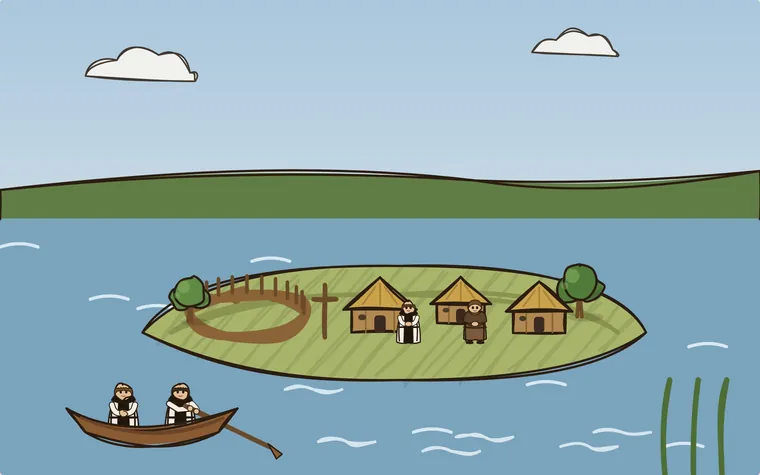
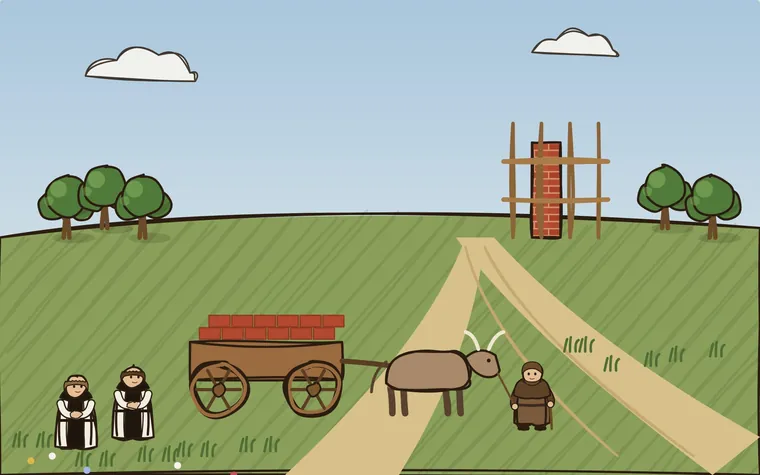
The community moves to the shore at Chorin.
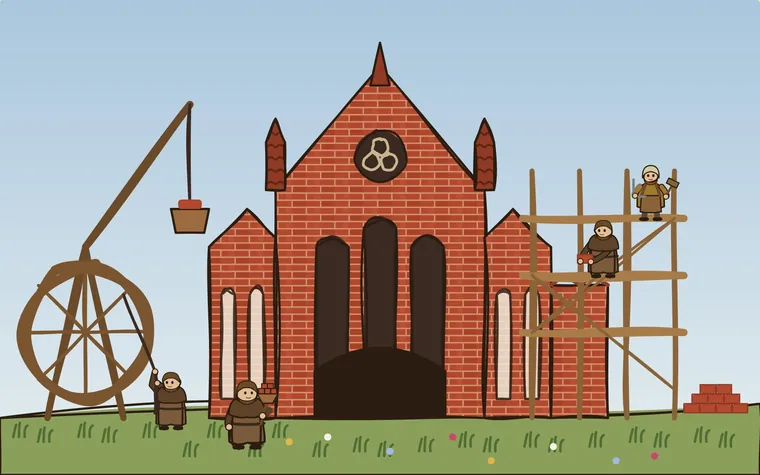
Around 1300 the great west front rises in Brick Gothic.
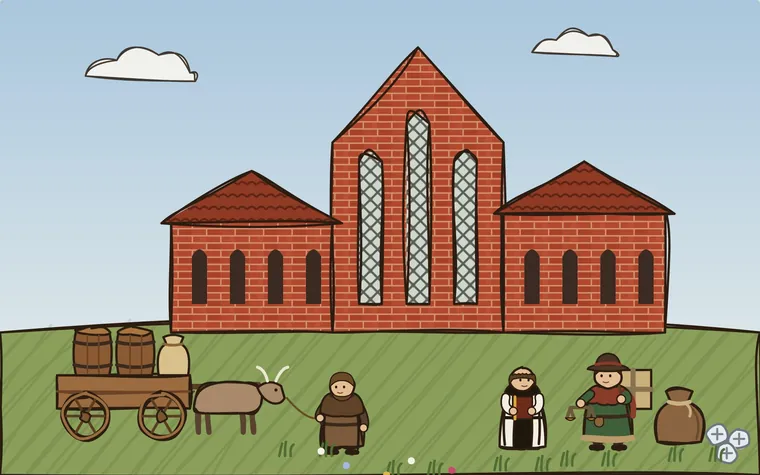
In the 14th and 15th centuries the abbey keeps enlarging its estates.
Era II in the art book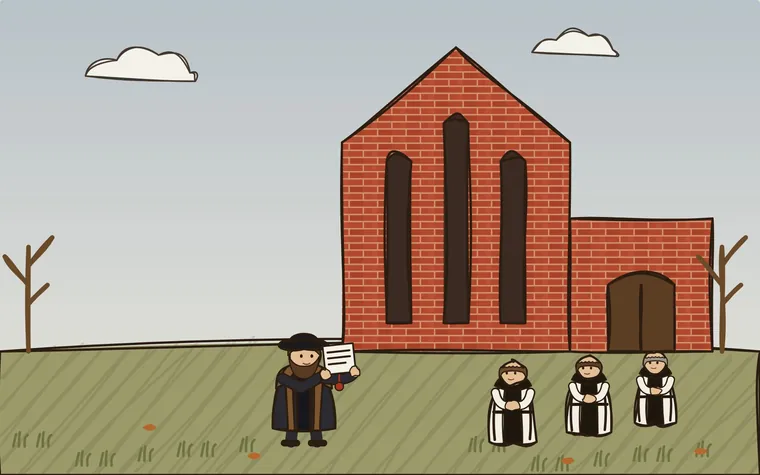
Brother Heinrich makes bricks, Brother Konrad fishes. Each one works at his own place in the pencil-style miniature. Tap one to meet him.
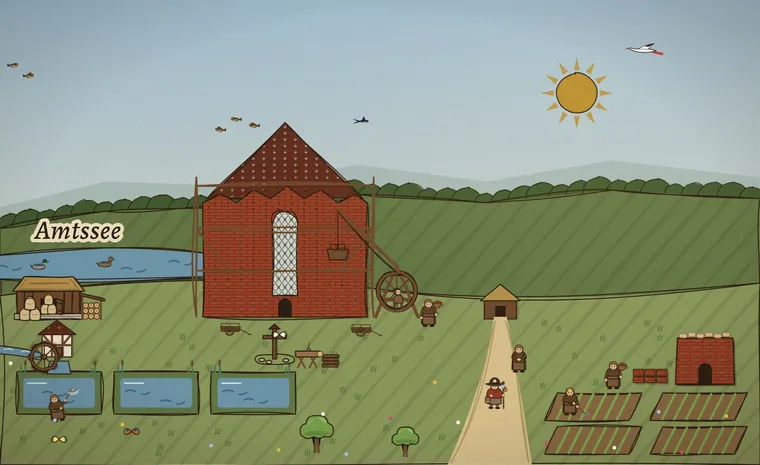
Build fishponds, fields, kilns and granges. Five eras and thirteen stages, from Mariensee island to the summer concerts of today.
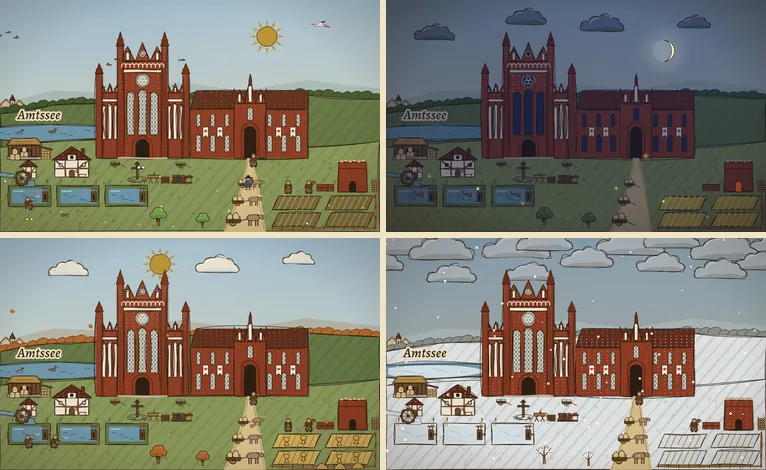
In winter the fields sleep and the monks pray; in the evening the windows glow. The sun, the moon and the weather change while you play.
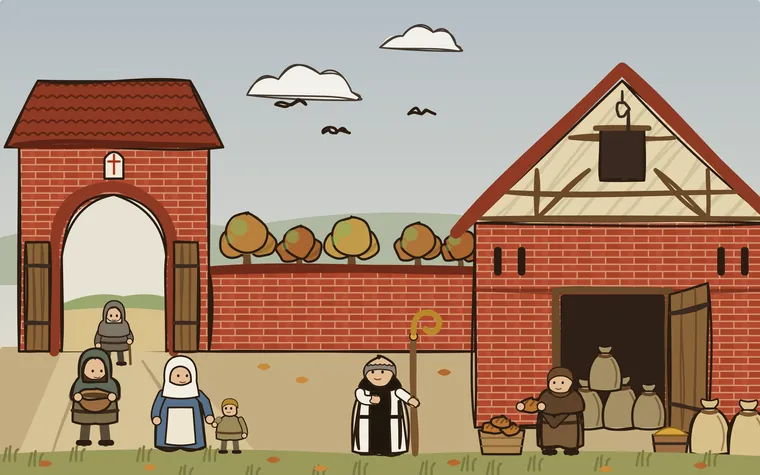
Open the granary in a year of hunger, or keep the stores? Six dilemmas for the abbot; four of them come back as echoes in a later era.
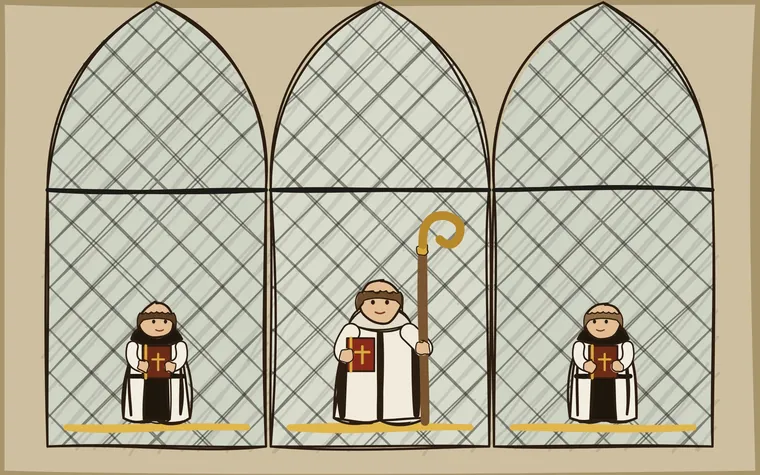
Twenty-eight illustrated chronicle pages: the Ascanian margraves, Cistercian life, the Reformation and Schinkel’s rescue.
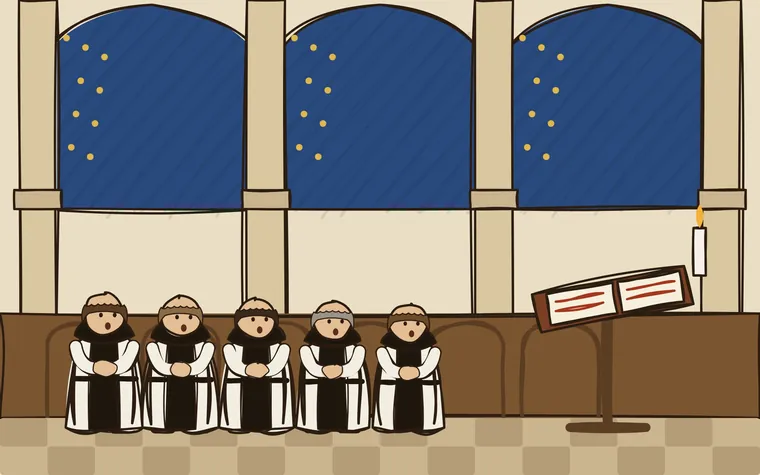
Recorder, harp, lute, vielle, organ, choir and bells. The music changes with the eras, and the sounds of nature follow the season, the weather and the hour.
The abbey never lived behind closed walls. Wars, plague, floods and new lords came near the real Chorin, and we took such moments from the sources. Each one reaches your abbey in its own year, as a choice or a small trial. The events are real; what your abbey does about them is up to you.

Margrave Waldemar lies buried at Chorin, and the Brandenburg line of the Ascanians has died out. The abbey needs a new protector.
A choice A rider of the Duke of Saxony is at the gate. Ask for his lord’s letter, or wait for a new margrave?

A man comes forward who says he is Margrave Waldemar, home from a long pilgrimage. In 1350 he is declared an impostor.
A choice His envoy asks to see the margrave’s tomb. Show it to him, or wait for the verdict?

The margrave and the dukes of Pomerania fight at Angermünde, not far from Chorin. The wars over the Uckermark last until 1427.
A choice The margrave asks for carts. Send two lay brothers with one, or keep them at home?

In April a Hussite army marches into the Mark. Gersdorf near Eberswalde is the northernmost place it is known to have reached.
A trial Smoke on the horizon: bring in the grain before the day is out.

The plague goes through the Uckermark and reaches Prenzlau in August. The authorities order quarantine and health passes.
A trial A watch stands at the estate’s gate. Lay in food for the weeks of quarantine.

Cuts and dykes give the winding Oder a new course, and settlers found new villages in the drained Oderbruch.
News from afar Word of it reaches the estate. Nothing to decide.

After the defeat at Jena and Auerstedt, French troops occupy Berlin and the Mark and demand food and fodder at short notice.
A choice French riders want hay and straw. Load the cart in time, or let them fetch it from the barn?

Cholera reaches Prussia for the first time. Cordons go up, and contact with places where it rages is forbidden.
A choice An official brings the order. Close the estate’s road, or send food to the cordon?

The Oder floods. On 30 July a crack in the dyke at Hohenwutzen reaches its top, and helpers fill eight million sandbags.
A trial Send your team to the dyke with food for the helpers.
Lehnin Abbey was founded in 1180 by Otto I, Margrave of Brandenburg, and the first monks of Mariensee came from its community. A legend first written down in the 14th century tells that Otto, asleep after a hunt, dreamt of a hind and chose to build a monastery rather than a castle.
We are planning a sixth era that takes your chronicle back to this mother abbey, where it all began.
Planned for the first quarter of 2027. A big free update for everyone who owns the full chronicle.
“I only dropped in to take a look and ended up staying longer than I planned. It’s fun to watch the monastery slowly grow. A good game for when you want to relax and take your time.”
“I really like the atmosphere of this game. You never feel that something is pushing you to hurry. You can drop in for a few minutes, improve something, look at your monastery and get back to your day. And after playing I wanted to visit Chorin in person 💚”
“Well, that’s it, I’m in charge of a medieval monastery now 😂 I didn’t think I’d enjoy keeping an eye on resources and building, but it pulls you in. I’d like even more ways to develop it, but overall it’s a really pleasant game for short breaks.”
“What caught me most was the history. In games like this you usually build some abstract town, but here there’s a real place with its own history. Because of that, even an ordinary building upgrade feels a little different. Simple in its presentation, but with an interesting idea.”
Phone, tablet or computer: open the page and play. Nothing to download, no account.
Add “Chorin: Ora et Labora” to your desktop or home screen: its own icon, full screen, just like a native app.
After the first visit the game runs without internet. Your progress is saved on your device.
A guest now waits while you think, a fever comes only when you can answer it, and a few quieter details in the game and on the website.
A proper Y in our lettering, calmer first minutes and a few small things in the game that now behave as they should.
The home page has a new look: a title that fills its lines, a snail from the game’s margins, era cards that lead into the art book, and the latest news in one place.
The price waits until your first goal, your own chronicle comes first, and the abbey names its weather in words instead of timers.
A quiet update: every button, bar and card of the abbey now comes from the same hand, so the game and the site read like one book.
History now answers back: each choice has its aftermath, and its page shows how it really was. The goal stands beside your resources, and every building keeps growing.
“Chorin: Ora et Labora” is a calm idle (incremental) game about the real Kloster Chorin: you build and decide, the monks work while you play, and when you close the game the abbey simply waits for you. A whole chronicle takes about 13 hours; Era I takes about three.
It is free to start: Era I, about three hours, plays without paying. The four later eras, about ten hours, are one purchase of €9.99 (VAT included). No subscription, no ads, and if it isn’t for you, you get your money back within 30 days. Buy the full chronicle once, and every update we release comes to you at no extra cost: new pages, events and improvements, on every device you sign in on.
Yes. A sixth era is planned for the first quarter of 2027: the chronicle returns to Lehnin, Chorin’s mother abbey, founded in 1180 by Margrave Otto I; the first monks of Mariensee came from there. It will be a big free update for everyone who owns the full chronicle.
No. It runs in the browser on a phone, tablet or computer. You can also install it as an app from the browser menu, and it works offline.
Yes, automatically, in your browser on this device. Sign in with your e-mail (no password: we send you a 6-digit code) and your abbey is also saved online, so you can continue on another phone or computer. Without signing in you can still move it with an export code in the settings.
English, German, Russian, Turkish, Italian, Polish, Ukrainian and Romanian.
Events, dates and people follow the sources on Kloster Chorin: the abbey’s charters (Riedel’s Codex diplomaticus Brandenburgensis, 1857), Kloster Chorin and Museum Eberswalde, Schinkel’s drawings in the Berlin Kupferstichkabinett, and current research. Where sources disagree, the game states only what they agree on.
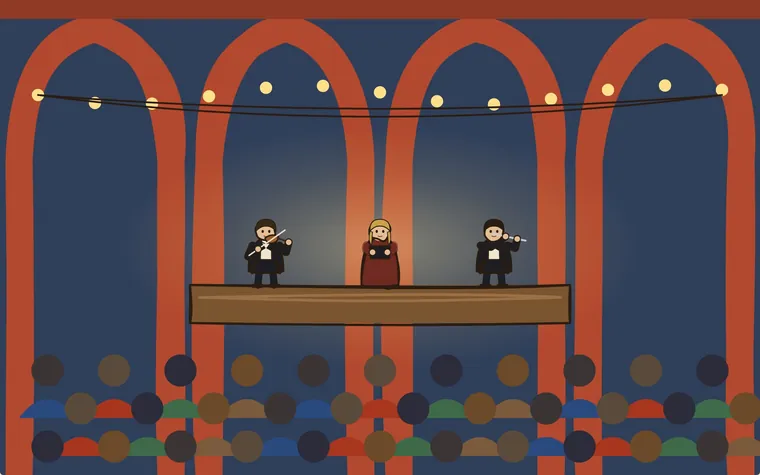
Yes. Kloster Chorin (Chorin Abbey) is a former Cistercian abbey in Chorin, Brandenburg, about an hour from Berlin. The monks moved there in 1273 from their first site on an island in Lake Parstein; since 1964 the Brick Gothic church has hosted the Choriner Musiksommer concerts every summer. Opening hours and tickets: kloster-chorin.org.
Yes. The events the abbey lives through, from a new protector in 1320 to the Oder flood of 1997, happened in the Mark Brandenburg, several of them close to Chorin. Each has a chronicle page that states only what the sources agree on and names them. What your abbey does in each of those moments is a game choice, not history.

Kloster Chorin stands in Brandenburg, about an hour from Berlin. The game tells its true story, with sources, so you will recognise every gable when you get there.
Plan a visit at kloster-chorin.org ↗Buy the full chronicle once, and every update we release comes to you at no extra cost: new pages, events and improvements, on every device you sign in on.
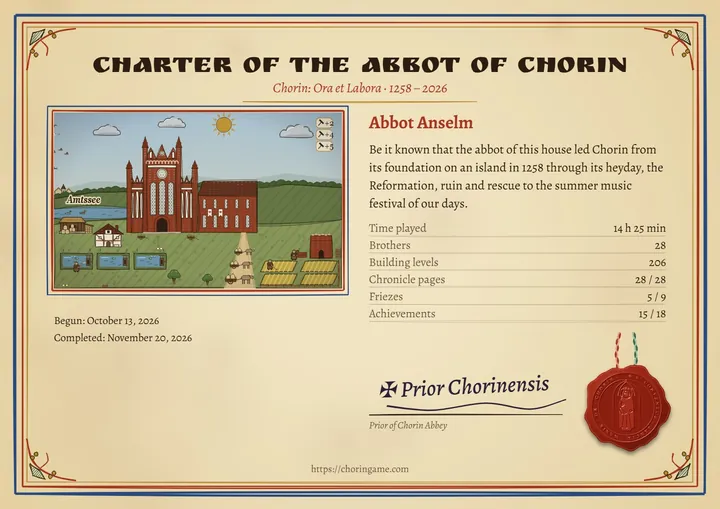
The monks are on the island. The first brick is yours.
Free to start